
NFT Market Evolution: From Speculation to Sustainable Growth
By Darren Smith
August 10, 2026
The NFT market has entered a new phase of quiet resilience in mid-2026. Far from the speculative frenzy that defined 2021 and early 2022, today’s landscape reflects consolidation, selective trading, and a clear pivot toward real-world utility. Daily sales volumes hover in the low millions of dollars, monthly figures sit near $300 million, and the global market capitalization tracks around $1.4 billion to $1.6 billion according to recent CoinGecko data.
While these numbers represent a sharp decline from peak monthly volumes exceeding $1 billion, they also signal a market that has shed excess speculation and retained dedicated participants. Blue-chip collections continue to hold value, newer use cases in tokenized real-world assets are gaining traction, and major marketplaces are adapting their models. The question is no longer whether NFTs are “dead,” but how the sector is evolving into a sustainable niche within the broader digital asset economy.
Current Market Snapshot: Selective Activity and Concentrated Liquidity
Data from the first week of August 2026 illustrates the selective nature of today’s trading. CryptoSlam recorded daily NFT sales volumes ranging from approximately $4.5 million to nearly $5 million in early August, with transaction counts in the 21,000 to 24,000 range. Later reports noted 24-hour volumes climbing toward $7 million to $8 million on stronger days, accompanied by over 100,000 buyers and sellers in a single recent week—the highest activity levels since March.
Ethereum remains the dominant chain by market depth and liquidity. Its NFT market capitalization sits near $1.4 billion, with blue-chip collections such as CryptoPunks, Bored Ape Yacht Club (BAYC), and Pudgy Penguins providing relative stability. Solana maintains a meaningful presence through collections like Claynosaurz and Mad Lads, while Bitcoin Ordinals occupy a smaller but persistent niche.
Annual trading volume for 2025 totaled roughly $5.5 billion according to CryptoSlam, a 37 percent decline from 2024 and more than 90 percent below the 2021 peak. Early 2026 monthly averages have settled around $300 million. This contraction has been accompanied by marketplace shifts: several centralized exchange NFT platforms, including Binance’s, have wound down operations, leaving specialized venues such as OpenSea, Magic Eden, Blur, and Rarible as primary hubs.
The market has become distinctly “K-shaped.” A small tier of established collections and utility-focused projects retains liquidity and collector interest, while the long tail of speculative 2021-era projects shows near-zero activity. Studies indicate that the vast majority of collections now exhibit minimal trading, with many holders facing significant paper losses from peak valuations.
Blue-Chip Resilience and Shifting Collector Behavior
Collectors have grown more discerning. Long-term holders and institutional-style participants now drive a larger share of activity compared with the retail FOMO of previous cycles. Pudgy Penguins, under continued leadership focus, has expanded beyond pure digital trading into physical product lines distributed through major retailers, generating revenue streams independent of secondary market fluctuations.
CryptoPunks continues to command premium floor prices and occasional high-value sales, reinforcing its status as a foundational digital collectible. BAYC and related Yuga Labs assets maintain community engagement even as overall sector volumes remain subdued. These collections benefit from established brand recognition, strong holder communities, and, in some cases, ongoing development of utility features.

Trading behavior has also matured. Average sale prices have compressed substantially from earlier peaks, making entry points more accessible while concentrating volume in proven assets. Marketplaces have responded with lower fees and improved interfaces. OpenSea’s OS2 updates and fee reductions earlier in 2026 aimed to recapture share, while Magic Eden remains a key venue for Solana activity and Rarible has expanded its Solana offerings, featuring collections such as Claynosaurz.
Emerging Utility: Tokenized Assets and Real-World Integration
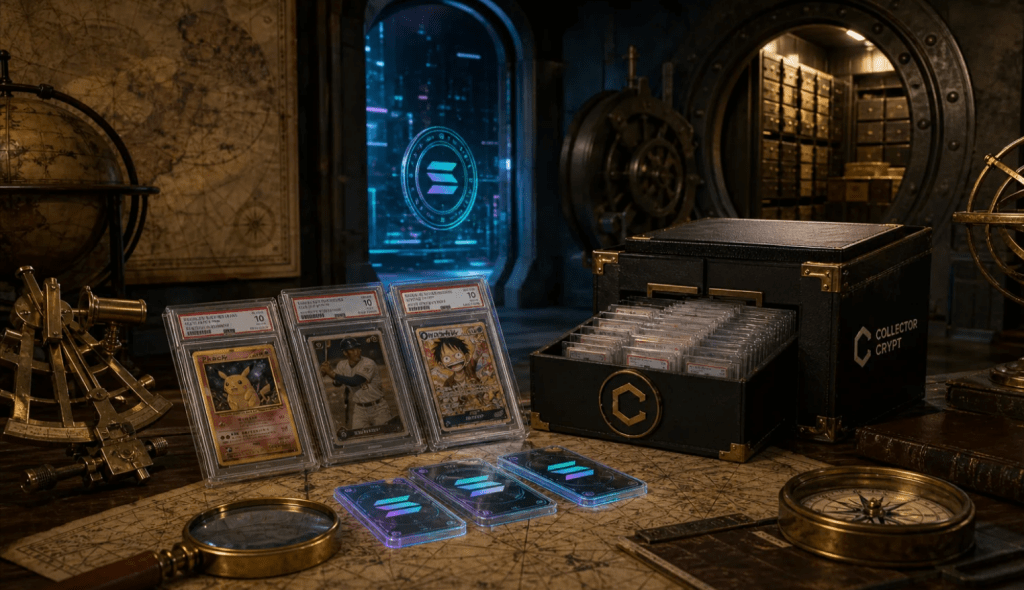
Perhaps the most significant development in 2026 is the expansion of NFT technology beyond profile pictures and digital art into practical applications. Tokenized trading cards and real-world asset (RWA) collectibles have shown notable growth, particularly on Solana. Platforms focused on physical trading cards reported record monthly volumes, with one sector reaching $69.5 million in a single recent month. Collector Crypt has emerged as a leader in this category, facilitating substantial cumulative volume and revenue through on-chain representations of physical cards.
This trend aligns with broader RWA tokenization momentum across crypto. NFTs are increasingly used for event ticketing, digital identity, membership programs, in-game assets, and loyalty systems. Gaming integrations and creator economy tools continue to develop, providing use cases that do not rely solely on speculative secondary trading. Analysts note that these applications help NFTs regain relevance as blockchain infrastructure matures and user interfaces improve.
Regulatory clarity has also advanced in some jurisdictions. Joint interpretations from U.S. regulators classifying certain NFTs as digital collectibles rather than securities or commodities have reduced uncertainty for institutional participants exploring the space.
Marketplace Evolution and Competitive Dynamics
OpenSea remains one of the largest general-purpose marketplaces, though its business model has diversified. Fee cuts and a greater emphasis on fungible token trading have altered its revenue profile. Magic Eden continues to dominate Solana NFT activity, while Blur caters to more active traders. Cross-chain capabilities and improved discovery tools are becoming standard as platforms compete for a smaller but more sophisticated user base.
Centralized exchanges largely exiting dedicated NFT marketplaces has reinforced the importance of decentralized and specialized platforms. Users increasingly prioritize self-custody and lower fees, trends that favor venues built specifically for digital collectibles and tokenized assets.
Outlook: Steady Niche Growth Rather Than Explosive Return
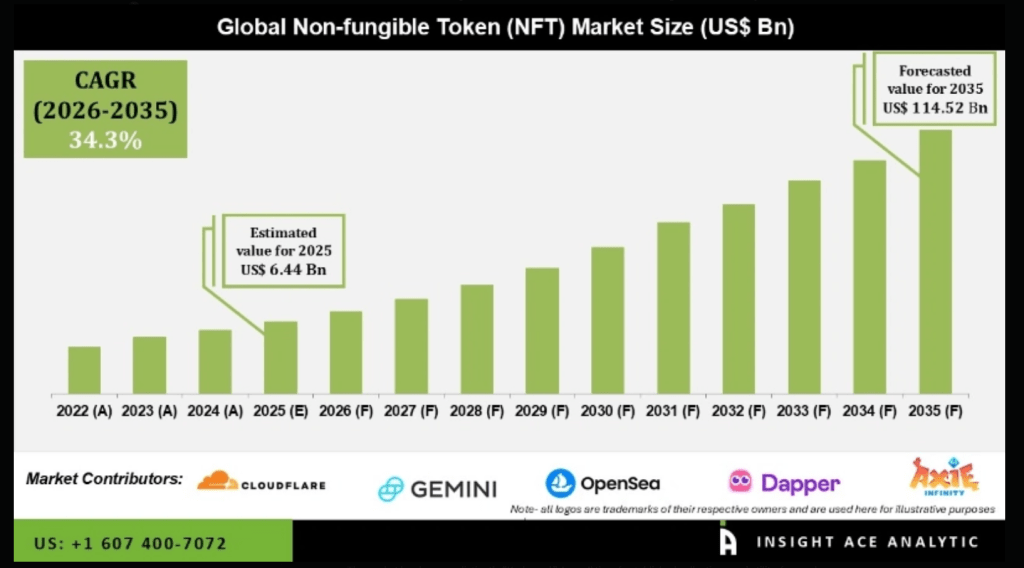
Looking ahead, most observers expect the NFT market to remain a specialized segment rather than return to 2021-style mass retail participation. Projections for overall market size vary widely depending on methodology—some forecasts emphasize continued expansion driven by utility and institutional interest, while near-term trading data points to sustained moderation.
Key factors to watch include Ethereum price stability, which historically correlates with NFT liquidity; continued growth in tokenized collectibles and RWAs; and whether blue-chip collections can expand their utility offerings. Community engagement metrics and unique active wallets provide additional signals of underlying health beyond pure sales volume.
The 2026 NFT market is smaller, more focused, and more utility-oriented than its predecessors. It has survived the post-hype correction and is now building the foundations for longer-term relevance. For collectors, creators, and builders who prioritize substance over speculation, the current environment offers clearer opportunities than the chaotic peaks of years past. Activity remains real, liquidity concentrates where value is perceived, and the technology continues to find new applications. In that sense, the market is not merely surviving—it is refining itself for the next chapter of digital ownership.
Crypto Disclaimer: This article is for informational and entertainment purposes only. It does not constitute financial, investment, or legal advice. Cryptocurrencies and NFTs are highly volatile and involve significant risk of loss. Always do your own research. The cover image in this article was AI-generated.
