

Volumes Stabilize as Utility and Real-World Assets Drive Selective Recovery
By Darren Smith
August 21, 2026
As of August 21, 2026, the non-fungible token market continues its deliberate evolution from the speculative frenzy of prior years into a more selective ecosystem defined by utility, real-world integration, and concentrated activity among established projects. Trading volumes remain far below the peaks of 2021 and 2022, yet data from multiple trackers reveals pockets of resilience and structural maturation that industry observers describe as a K-shaped recovery. Blue-chip collections and utility-driven applications hold value while the long tail of low-activity projects fades.
Global NFT market capitalization hovered near $1.4 billion to $2.1 billion in recent readings from CoinGecko and related analytics platforms, reflecting a decline of more than 90 percent from the 2022 high. Annual sales volume for 2025 settled around $5.5 billion according to CryptoSlam figures, down approximately 37 percent from the prior year and a fraction of the multi-billion-dollar monthly tallies once common. Daily and weekly volumes in mid-August 2026 have shown modest activity, with reports of over $7.5 million in sales across a 24-hour window on some days and more than 100,000 buyers and sellers in a recent week—levels not seen since March.
Ethereum remains a dominant chain for higher-value transactions, yet competition has intensified. On August 20, Base approached flipping Ethereum in daily NFT volume, driven largely by on-chain collectibles platforms such as Beezie. Solana, Bitcoin Ordinals, and other networks continue to capture specialized segments, particularly in gaming and emerging gacha-style mechanics that processed hundreds of millions in gross activity earlier in the summer.
Projections for the broader NFT market paint a more optimistic long-term picture. Industry reports estimate the global non-fungible token market size at roughly $60.82 billion to $64.53 billion for 2026, with compound annual growth rates ranging from 24 percent to over 41 percent through the early 2030s as the technology embeds deeper into gaming, fashion, real estate tokenization, and identity solutions.
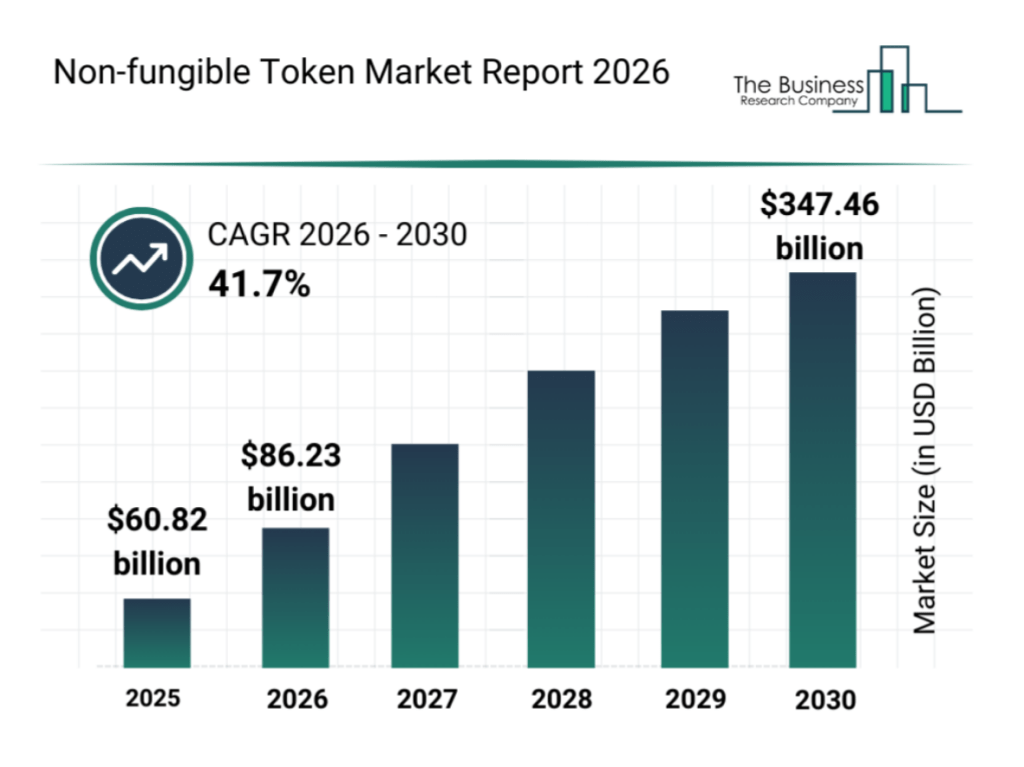
This growth narrative rests less on pure speculation and more on tangible use cases. Gaming NFTs account for an estimated 38 percent of transaction volume in 2026 analyses, supported by play-to-earn models and true digital ownership. Real estate tokenization has reached valuations near $1.4 billion, while fashion and luxury digital wearables approach $890 million. Identity and credential NFTs have seen millions of tokens issued.
A standout example of real-world synergy appeared around the 2026 FIFA World Cup. Through the FIFA Collect platform, digital collectibles generated approximately $24 million in volume between May 2025 and the tournament final. More than 100,000 fans used these NFTs to secure access to physical match tickets, demonstrating utility beyond mere ownership records. This integration of blockchain provenance with live experiences marked a departure from earlier hype cycles.
Pudgy Penguins exemplifies the shift toward consumer-facing brands. The collection, which celebrated five years since its original mint in July, has expanded aggressively into physical retail. Plush toys and related products now appear on shelves at Target, Walmart, and other major retailers, generating independent revenue streams. The brand has also launched trading card games, comic books, and ongoing community events, while its associated $PENGU token and broader ecosystem maintain engagement. Floor prices for the core Ethereum collection have shown resilience relative to many peers under the leadership of CEO Luca Netz.

Regulatory developments are adding structure. In the United Kingdom, the Financial Conduct Authority is preparing a framework requiring platforms to publish detailed documents for each asset or collection, with authorization applications expected to open in September 2026 ahead of full implementation in 2027. In the United States, joint SEC and CFTC guidance has clarified NFTs as digital collectibles in many cases, reducing classification uncertainty for institutional participants. These steps aim to support projects with genuine utility while curbing manipulation risks.
Marketplace dynamics reflect the same selectivity. OpenSea, Blur, and Magic Eden continue to process the bulk of secondary trading, with fee reductions and cross-chain features introduced to retain users. Some centralized exchange NFT platforms have exited the space, pushing activity toward decentralized or specialized venues. Average sale prices have compressed significantly from earlier highs, yet high-value individual transactions still occur—Ethereum recorded a single sale exceeding $52 million earlier in the summer.
| Metric | Approximate 2025/2026 Value | Comparison to Peak |
|---|---|---|
| Annual Sales Volume | $5.5 billion (2025) | Down ~37% from 2024; far below 2021-22 |
| Market Cap | $1.4B–$2.1B (mid-2026) | Down >90% from 2022 |
| Ethereum Monthly Volume (Q1 2026) | ~$720 million | 50% rebound from 2024 trough |
| Active Wallets (30-day, ETH) | ~505,000 | ~42% of 2022 high |
| Projected Market Size 2026 | $60B–$64B | Strong growth forecast |
Analysts note that 95 percent or more of collections show near-zero activity, confirming the market’s concentration. Survivors tend to offer clear monetization, community, or off-chain distribution. Projects such as CryptoPunks retain prestige status, while newer on-chain gacha and physical-redemption models on Base and Solana attract fresh volume.
“The speculative ‘JPEG’ era is over; what remains is a technology platform for digital ownership that spans gaming, real estate, luxury fashion, and identity credentials,” one mid-2026 industry overview observed.
Corporate activity continues in parallel. On August 21, 2026, NFT Ltd. (NYSE American: MI), an operator of an online trading platform for international art and collectibles, announced the pricing of a registered offering of 437,957 units at $4.60 per unit, expected to raise approximately $2.0 million in gross proceeds for working capital. The closing is anticipated around August 24.
Looking ahead, the consensus among data-focused observers is measured optimism rather than exuberance. Volumes are expected to remain moderate and concentrated. Success will hinge on projects that deliver verifiable utility, regulatory compliance, and bridges to mainstream consumers—whether through retail partnerships, event ticketing, or gaming economies. The technology of unique digital ownership has survived the bust; its next chapter depends on execution rather than narrative alone.
Key trends shaping activity today include:
- Continued dominance of utility over pure speculation
- Multi-chain competition with Base and Solana gaining share in collectibles
- Expansion of physical-digital hybrids led by brands like Pudgy Penguins
- Regulatory clarity enabling institutional exploration
- Focus on high-quality, revenue-generating intellectual property
For the latest rankings and volume data, platforms such as CryptoSlam, DappRadar, and CoinGecko’s NFT charts remain essential resources. As August 2026 progresses, the market’s selective recovery offers a clearer signal of which applications of non-fungible tokens will endure.
Disclaimer: This article is provided for informational and educational purposes only. It does not constitute financial, investment, legal, or trading advice. The NFT market is highly volatile, and past performance is not indicative of future results. All data, statistics, and market observations are based on publicly available sources as of August 13, 2026, and may change rapidly. Readers should conduct their own research and consult qualified professionals before making any decisions related to digital assets. The cover image for this article may have been created using artificial intelligence (AI).
