

NFT Market Resilience in 2026: A Comprehensive Overview
By Darren Smith
July 10, 2026
Bold claims of the NFT market’s demise have been greatly exaggerated. As of July 10, 2026, the non-fungible token sector demonstrates resilient recovery and strategic evolution, shifting decisively from 2021-style speculation toward practical utility in gaming, branding, real-world assets (RWAs), and creator economies.
Ethereum NFT monthly trading volumes hover around $720 million, marking a roughly 50% rebound from 2024 lows, while flagship collections report notable floor price gains amid broader market stabilization. This is a maturing industry, not a revival of past exuberance.
Historical Context: Boom, Bust, and Measured Rebound
NFTs captured global attention in 2021–2022 with record sales volumes exceeding $12 billion in peak months, propelled by high-profile drops and cultural phenomena. The subsequent crypto winter triggered sharp declines, with sales dropping dramatically and many projects becoming inactive. By 2024–early 2025, active wallets fell and volumes contracted significantly.
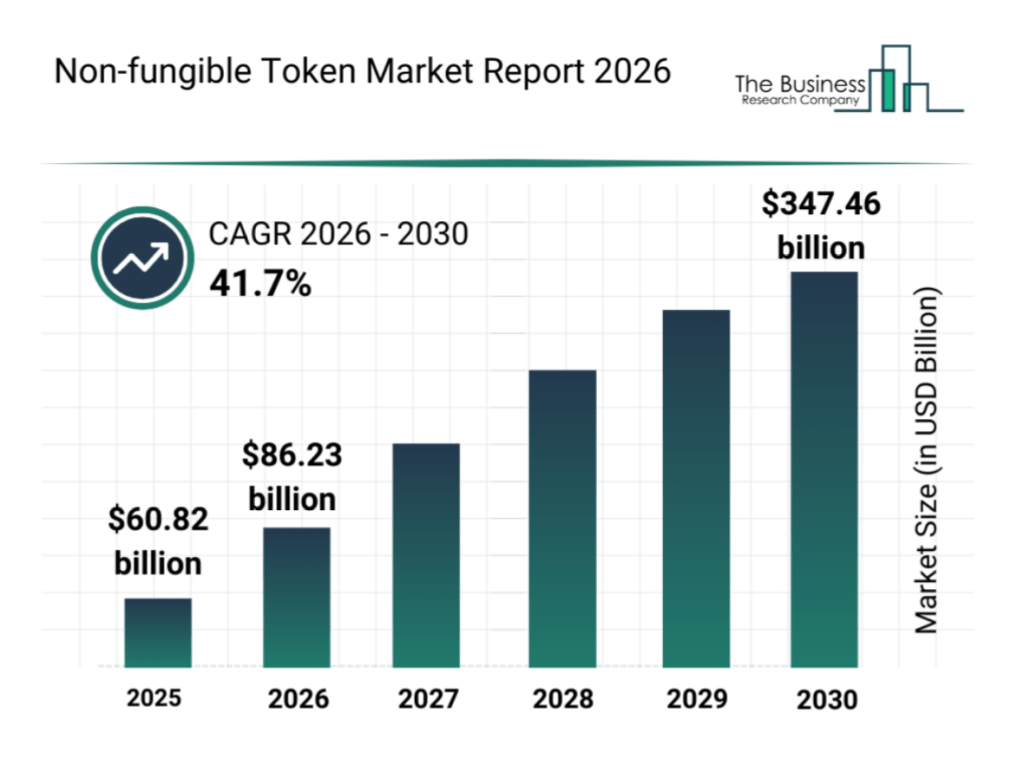
In 2026, the landscape has transformed. Global NFT market size estimates for the year range from $18.71 billion to approximately $60.82 billion, supported by CAGRs of 23–41% in forward projections through 2030–2035. Growth now stems from tangible utility rather than hype, including tokenized memberships, play-to-own gaming assets, and brand loyalty programs. Track real-time NFT data and rankings here.
2026 Market Snapshot: Key Metrics and Platform Dynamics
Ethereum retains dominance at around 62% of activity, but Solana and Bitcoin Ordinals provide competitive alternatives with faster, cheaper transactions. Leading marketplaces include OpenSea (still a volume powerhouse with billions in historical cumulative trading), Blur (strong Ethereum share), and Magic Eden (leading multi-chain and Ordinals activity).
Recent performance highlights (early-to-mid 2026):
- Average monthly ETH NFT volume: ~$720M.
- 30-day active wallets: ~505K (recovering).
- Notable rebounds in blue-chips, with some collections up over 100% in floor prices during recovery phases.
Early 2026 saw a $220 million weekly market capitalization lift, underscoring renewed confidence. View live marketplace volumes and trends.

Pudgy Penguins stands out as a prime success story, leveraging community strength and real-world merchandising (toys, apparel, and partnerships) to achieve substantial gains and mainstream visibility. Discover more about thriving collections.

Driving Forces: Utility, Gaming, and RWAs
Blue-chip projects like CryptoPunks (prestige leader), BAYC (ecosystem builder via Yuga Labs), and Azuki continue to anchor the market with strong communities and IP extensions. Gaming NFTs, which can comprise up to 38% of certain volumes, deliver actual in-game value and ownership rights.
Real-world asset tokenization is accelerating, enabling fractional ownership, provenance tracking for luxury goods, and event ticketing. Music and entertainment sectors increasingly use NFTs for direct royalty distribution to fans. Explore upcoming NFT projects and mints.
Bitcoin Ordinals add a layer of on-chain permanence, attracting new users to platforms like Magic Eden.
Persistent Challenges and Risk Factors
Regulatory oversight remains active, with platforms facing scrutiny over potential securities implications. Environmental concerns have diminished thanks to proof-of-stake transitions and layer-2 scaling, yet user onboarding friction and occasional scams continue to challenge broader adoption.
The market exhibits a clear “K-shaped” recovery: high-quality, utility-rich projects flourish while speculative, low-effort collections languish. Read detailed market analysis.
Expert Insights and Broader Implications
Industry observers emphasize the maturation: utility, community, and credible execution now define success. Events like NFT.NYC 2026 showcase brand integrations and innovation across more than 50 major companies.
Cultural significance endures—NFTs empower independent creators, foster new fan economies, and establish verifiable digital scarcity in an AI-driven content world.
Forward Outlook: Sustainable Growth Trajectory
Analysts project continued expansion, with metaverse and digital collectibles segments growing at CAGRs above 25%. Interoperability, AI integration, and institutional RWA adoption represent key catalysts. By the 2030s, the market could reach hundreds of billions as NFTs normalize as tools for digital property rights.
Investment approach for today: Prioritize transparent teams, active on-chain metrics, and clear utility. Diversify, manage risk, and monitor comprehensive statistics.
Conclusion
On July 10, 2026, the NFT market stands resilient—smaller than its 2021 peak but fundamentally stronger, focused on enduring value creation. With platforms like OpenSea facilitating discovery and data aggregators providing transparency, the ecosystem offers opportunities for creators, collectors, and innovators alike.
This evolution from hype to infrastructure positions NFTs as a lasting component of the digital economy. Informed participation, grounded in utility and due diligence, will define the next phase of growth.
Crypto Disclaimer: This article is for informational and entertainment purposes only. It does not constitute financial, investment, or legal advice. Cryptocurrencies and NFTs are highly volatile and involve significant risk of loss. Always do your own research. The cover image in this article was AI-generated.
